One word, multiple categories
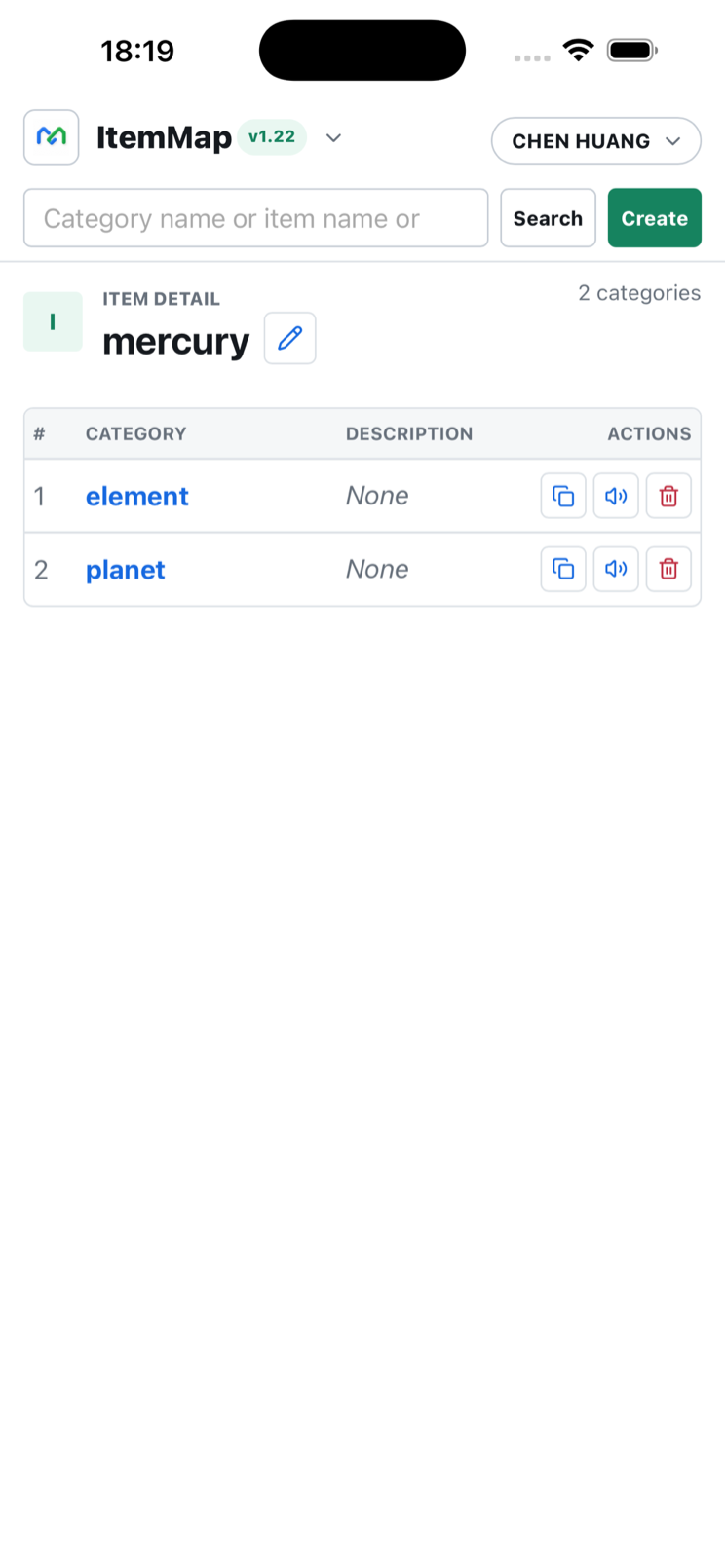
Organize the same word by topic, grammar, source, or situation without creating duplicate entries.
Vocabulary organizer · Multiple categories · Knowledge mapping
Put one word in multiple categories and keep a different translation, example, or note for each relationship. When an idea grows, continue it in a connected mind map.
Core features
ItemMap works for language learning, research, work knowledge, and anything that belongs in more than one category.
Organize the same word by topic, grammar, source, or situation without creating duplicate entries.
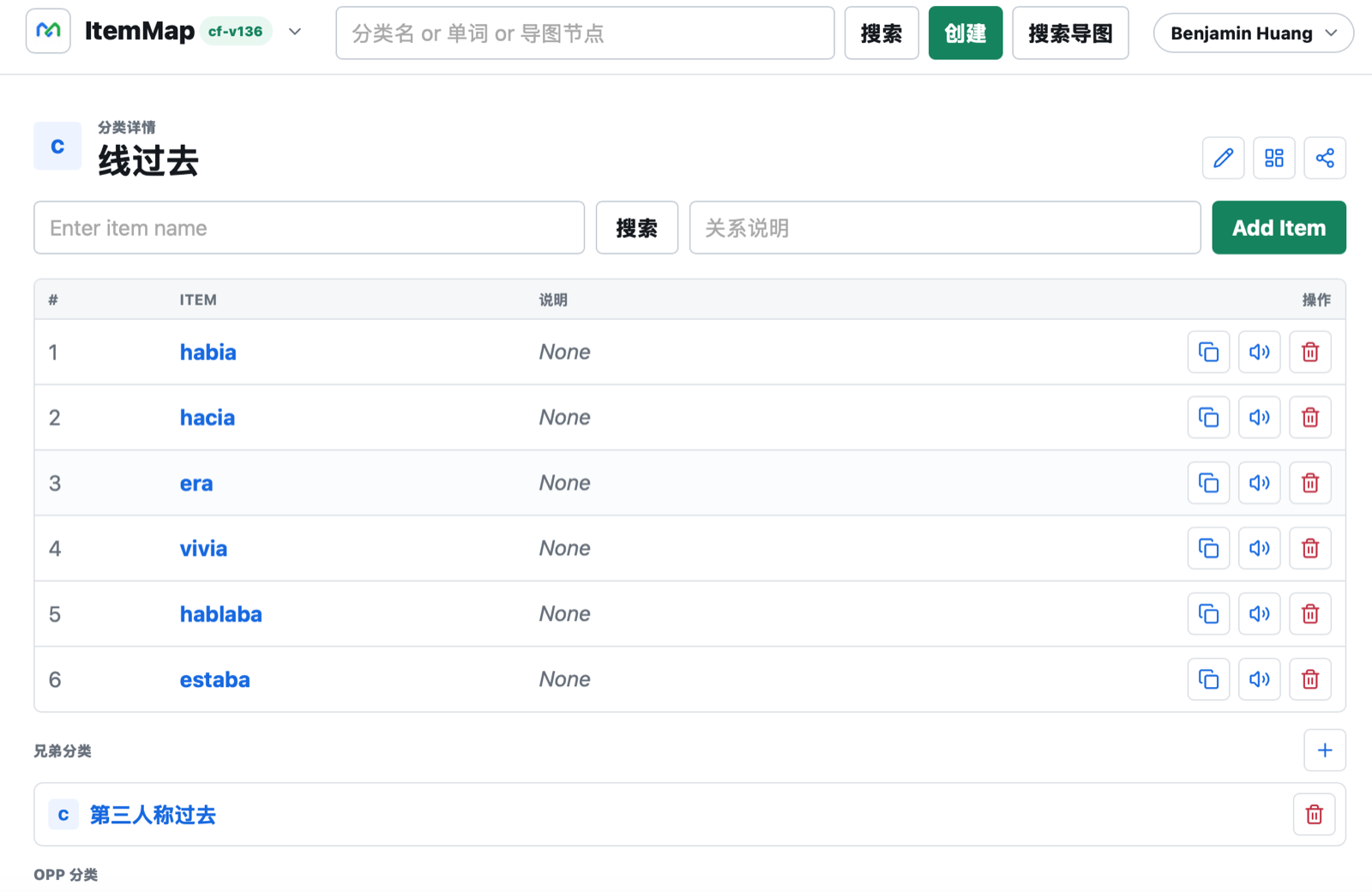
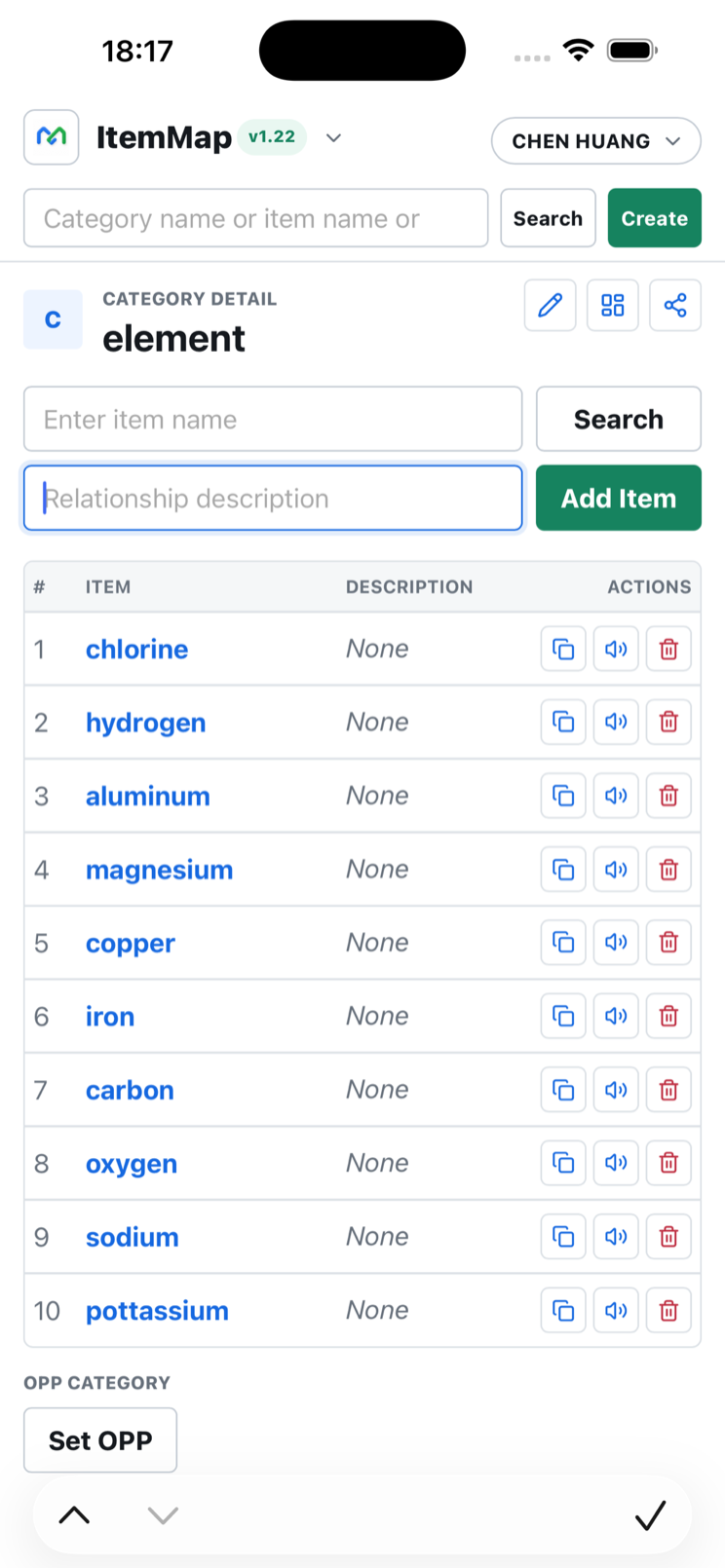
Keep different translations, contexts, examples, and reminders for the same word in different categories.
Build nodes, change hierarchy, link maps, and search your knowledge structure on a desktop canvas.
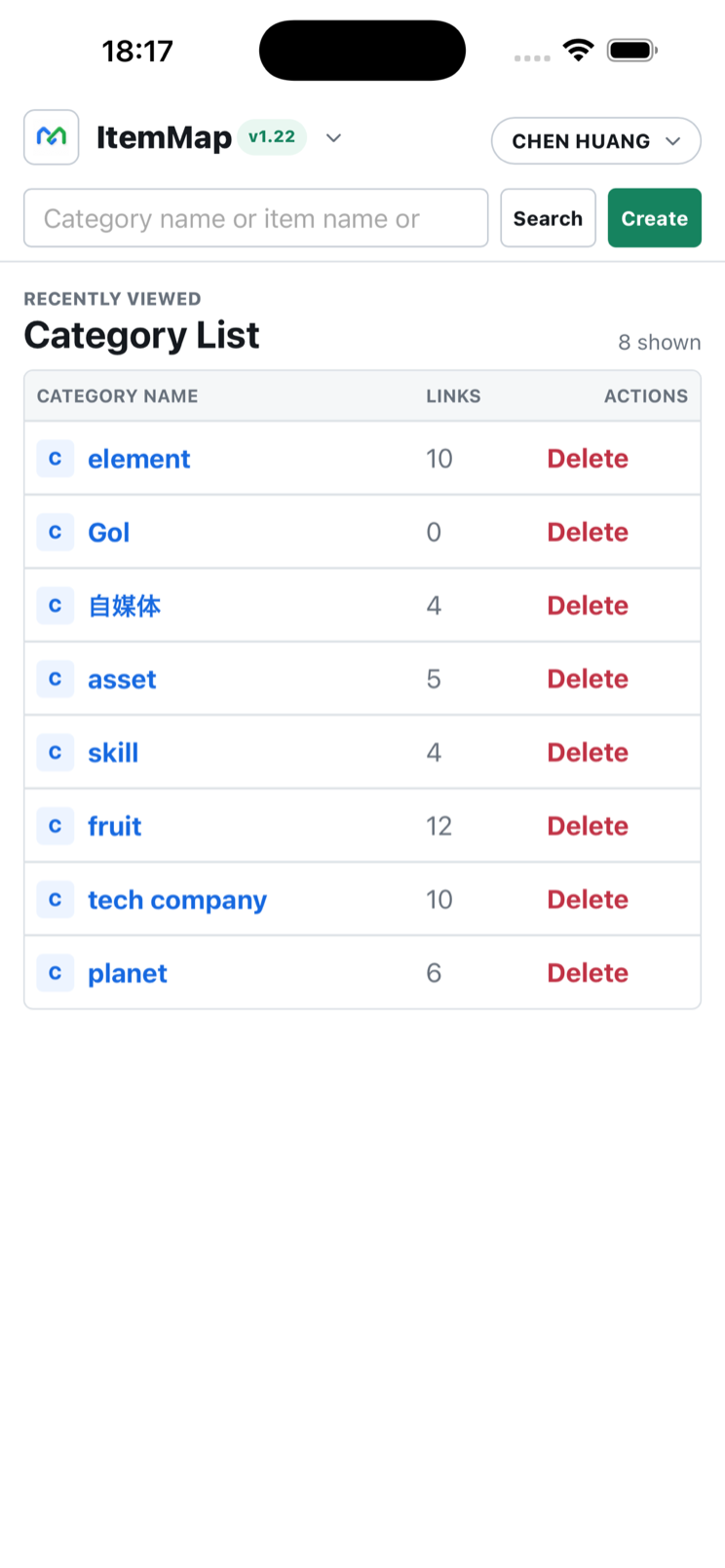
Real interface
Search categories, words, and mind map nodes from one place, with the same workspace on mobile and desktop.
Frequently asked questions
Create the word once in ItemMap, then search for it from another category and add it again. ItemMap creates a new relationship instead of duplicating the word.
Every category-to-word relationship has its own note, so you can save a different translation, example, grammar reminder, or context.
Your content is language-independent. You can organize English, Chinese, Japanese, Korean, Spanish, and other languages.
A normal list is usually linear. ItemMap uses many-to-many categories, so the same content can be found through different topics and contexts.
Yes. ItemMap is available on the web, iPhone, Android APK, and as a PWA, using the same account and workspace.